Lucebra vs. Udemy: A Practical Comparison for Instructors
Lucebra vs. Udemy: Which Platform Fits Your Teaching Goals? If you want to publish an online course, the right platform depends on more than the headline revenue percentage. Consider where learners wi...

Lets Talk
Instructor • Sep 23, 2026 • 3 min read
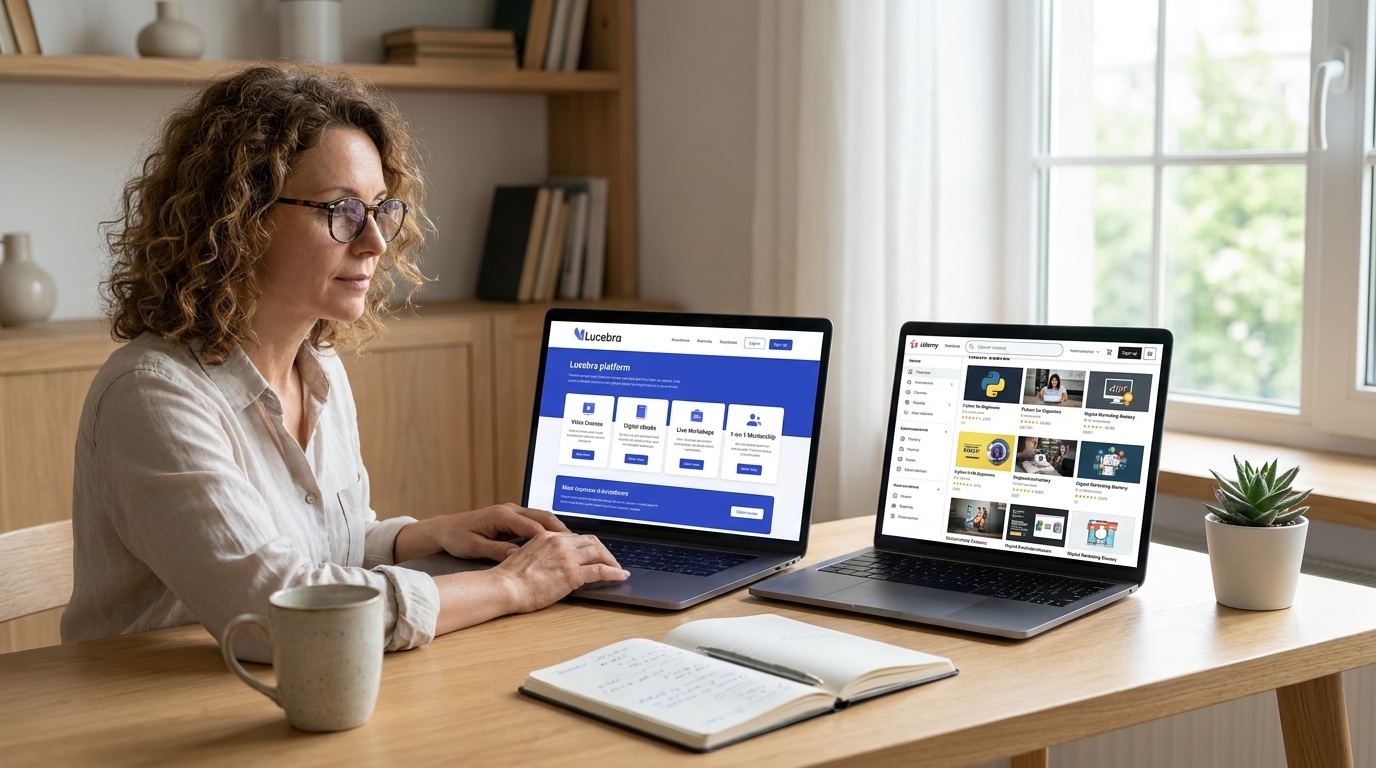
Lucebra vs. Udemy: Which Platform Fits Your Teaching Goals?
If you want to publish an online course, the right platform depends on more than the headline revenue percentage. Consider where learners will find your course, how you plan to teach, what other materials you want to sell, and how each sale is attributed.
Udemy is an established course marketplace. Lucebra combines a course marketplace with tools for e-books, live sessions, mentorship, and organizational learning. Both can make sense, but they serve different priorities.
How do instructor earnings compare?
The source of a sale matters. Udemy states that instructors receive 97% of the net amount for eligible purchases made through their coupon or referral link, and 37% for eligible sales without an instructor promotion. Udemy also has separate rules for subscription programs.
Lucebra advertises a 90% instructor share for qualifying sales through an instructor’s own link or promo code, and a 50% share for organic course sales. These figures describe different sales channels. They are not guaranteed take-home amounts.
Before choosing a platform, calculate a realistic example using your expected course price and the way buyers are likely to find you. Review each platform’s current terms for deductions, refunds, eligibility, and other revenue models.
Will you teach beyond recorded video?
An on-demand course can be enough for a focused topic. Other subjects work better when learners can join a live demonstration, buy a companion e-book, or arrange individual guidance.
Lucebra gives instructors ways to publish courses and e-books and offer live learning and mentorship. Udemy offers course publishing alongside its business and subscription programs. Map your planned learner journey—from discovery and enrollment to lessons, questions, and follow-up learning—before comparing the tools.
What matters to learners?
Learners should compare the actual course, instructor, syllabus, available subtitles, assessments, price, and access terms. A feature offered by a platform does not mean every course includes the same files, live support, or certificate.
Preview the lessons when available. Check the teaching language and subtitle options. Most of all, choose a course whose content and format fit what you want to learn.
Which platform should you choose?
Choose Udemy when its established marketplace and course publishing model align with your plan. Consider Lucebra when you want to combine courses with e-books, live sessions, or mentorship in one learning ecosystem.
If possible, test the publishing process and calculate an example sale under both platforms’ current terms before moving your full catalog.
Explore Lucebra’s instructor tools: https://www.lucebra.com/become-instructor
Frequently asked questions
Is Lucebra a Udemy alternative for instructors?
Yes. Lucebra supports online course publishing and offers additional formats such as e-books and live sessions. Compare both platforms’ current terms and tools against your teaching plan.
Does a higher revenue percentage always mean more earnings?
No. Earnings also depend on the sale price, how buyers find the course, eligible deductions, refunds, and the number of sales. Compare equivalent sales channels.
Can learners find courses in different languages on Lucebra?
Lucebra offers a multilingual interface, and supported course pages display subtitle options. Check the specific course page for its teaching language and available subtitles.
Share: