The TJ Walker Method: A Practical Guide to Public Speaking and Executive Communication
The distance between knowing your subject and communicating it effectively can be measured in one recording. Explain your idea to a camera for two minutes, play it back, and ask: Could a busy listener...

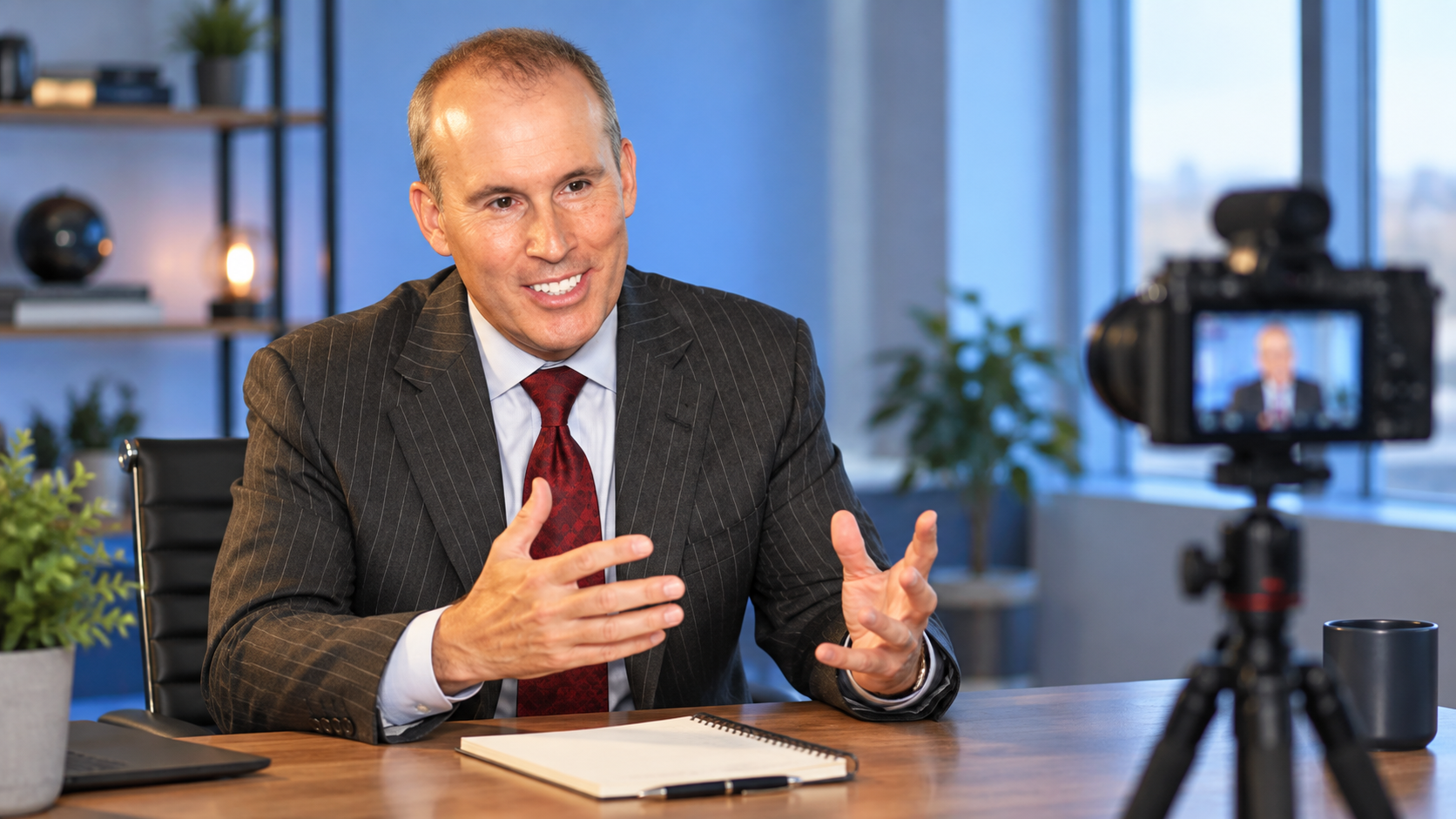
The distance between knowing your subject and communicating it effectively can be measured in one recording. Explain your idea to a camera for two minutes, play it back, and ask: Could a busy listener repeat the point and know what to do next?
That exercise captures the practical appeal of TJ Walker’s public speaking training. Walker is the founder of Media Training Worldwide and the author of Secrets to Foolproof Presentations, which his professional biography identifies as a USA Today No. 1 bestseller. His Lucebra course listings describe decades of presentation and media training, including work with senior public figures and business leaders. They also emphasize planning, memorable stories, video rehearsal, and feedback.
His Lucebra biography reports more than 12 million course enrollments across educational platforms. Enrollments should not be confused with a count of unique students. The scale matters here because the underlying challenge is universal: people often prepare what they intend to say without seeing or hearing how it lands.
Key Takeaways
- Build a speech around a decision or action the audience should make, then select only the material that supports it.
- Replace passive rehearsal with short recordings, specific observations, and another attempt.
- Prepare for the camera as a separate speaking environment: eye contact, framing, audio, and turn-taking all change.
- Treat confidence as a product of repeated, manageable practice rather than a personality trait.
Who Is TJ Walker, and What Does He Teach?
TJ Walker is a public speaking and media training instructor whose courses address presentations, interviews, persuasive communication, and executive meetings. His company says he has coached presidents, prime ministers, CEOs, and other senior figures. Lucebra hosts courses under his name covering beginner speaking, persuasive presentations, and presenting to executives.
The useful lesson is that a speech succeeds when its audience can grasp a message under the actual conditions of delivery: limited time, competing priorities, and imperfect attention.
The article below offers a practical framework built around themes visible in Walker’s course descriptions and training materials. The “three-step speech architecture” and “camera-confidence matrix” are editorial tools for applying those themes; they are not presented as trademarked methods or verbatim lessons from a particular course.
Why Familiar Public Speaking Advice Fails in Consequential Meetings
“Just relax” offers no action a nervous speaker can perform. “Memorize every word” can make a small interruption feel catastrophic. “Make eye contact” is hard to apply when the audience is a grid of video windows and the camera sits above the screen.
The stronger approach is to turn an unclear goal into a visible behavior. Instead of “be confident,” set a task: deliver the central point in the first 20 seconds. Instead of “sound natural,” record a one-minute explanation and remove the sentences you would never say to a colleague. Instead of “engage the room,” ask a question that reveals what decision the listeners need to make.
Three common preparation habits deserve particular scrutiny.
First, preparing slides before defining the audience’s decision encourages information dumping. A detailed deck can still lack an argument. Write the decision first, then decide which evidence the audience needs.
Second, rehearsing silently tests memory but not delivery. You cannot hear where you rush, trail off, or hide the main idea inside a long sentence until you speak aloud.
Third, practicing only the opening leaves the speaker vulnerable during questions. Rehearse the transition from your main point to a skeptical question, and practice giving a direct answer before adding context.
A phone recording and ten minutes of review can reveal an issue that another hour of slide editing will not.
A Three-Step Speech Architecture for Leaders
The following structure is a practical planning tool for a briefing, pitch, presentation, or short keynote: state the stakes, demonstrate the change, and specify the next action.
Step 1: State the Stakes
Open with the decision, problem, or consequence your listeners care about. A project lead might say, “We need to choose a deployment plan today because the current release process creates two hours of avoidable downtime each month.” That is more useful than beginning with the history of the team or a tour of the agenda.
The opening does not need theatrical drama. It needs relevance. Before writing it, complete this sentence: “By the end of this meeting, the audience should understand or decide ______.” If you cannot fill in the blank, the talk is not ready for a script.
Step 2: Demonstrate the Change With One Concrete Story and Supporting Evidence
A useful story shows a before state, a specific obstacle, an action, and an after state. For example, describe the moment a customer failed to complete onboarding, what the team discovered, what changed, and what happened next. If the result is not yet known, say so. A plausible example should never be presented as measured company performance.
Then add evidence appropriate to the claim. A financial decision needs assumptions and trade-offs. A technical decision needs failure modes and operational cost. An educational presentation may need a demonstration that listeners can inspect for themselves.
Use one idea per segment. If a slide contains four arguments, split it or decide which one the audience needs now. The speaker should supply meaning; the slide should help the listener see the evidence.
Step 3: Specify the Next Action
End with a request that a listener can actually fulfill: approve a two-week trial, choose between two options by Friday, or practice one technique before the next session. Name the owner and timing where appropriate. “We should communicate better” is an aspiration; “Each team lead will record a 90-second project update before Thursday’s review” is an action.
For a five-minute executive briefing, a starting allocation is roughly 30 seconds for stakes, three minutes for the core explanation and evidence, one minute for trade-offs, and 30 seconds for the request. Adjust to the audience and purpose. The point is to reserve time for the decision instead of running out of time before reaching it.
The Camera-Confidence Matrix: Adapt to the Setting
The same idea can sound persuasive in a room and distant on a video call. Camera confidence is partly a technical design problem. Consider two dimensions: audience size and interaction speed.
In a one-to-one video meeting, interaction is frequent. Use short explanations, pause, and invite the other person to test your interpretation. In a small remote team meeting, define how people should interrupt or raise questions. In a webinar or recorded lesson, interaction is limited, so signpost the structure and make each transition explicit. In an interview, the audience may be large but your immediate interaction is with one questioner; answer the question directly before broadening the point.
Before any camera session, check five things:
- Eye line: Place the camera near the screen area you will use. When making your key point, look into the lens instead of watching your own image.
- Framing: Leave comfortable space around the head and shoulders. Keep the camera near eye level so the audience is not looking up at you or down on you.
- Light: Put a light source in front of you when possible. A bright window behind your head can make your face difficult to see.
- Audio: Record 20 seconds and listen with headphones. A modest microphone in a quiet room may improve intelligibility more than an expensive camera.
- Turn-taking: Allow a brief pause after a question. Connection delays can make an immediate response sound like an interruption.
For a remote executive update, try a 60-second camera rehearsal. In the first 15 seconds, state the decision. In the next 30, give one reason and one trade-off. Use the final 15 to make the request. Watch it once without sound to observe posture and framing; listen once without video to assess pace and clarity. Then record it again.
How to Reduce Public Speaking Anxiety Through Controlled Practice
Anxiety before a speech is not proof that a person lacks ability. The goal of preparation is to make the task more familiar and manageable, not to promise that nerves will disappear.
Begin below the difficulty of the real event. Record a 30-second answer to “What is my main point?” Do not restart for every stumble. Review whether the answer is understandable, then make one improvement and record again. Next, deliver a two-minute version. Later, rehearse in front of one colleague, followed by a small group if available.
Keep the evaluation narrow. In one round, work on the opening sentence. In another, work on pauses. In a third, check whether the closing request is specific. Trying to fix voice, posture, wording, slides, and timing simultaneously often makes the next attempt harder.
Use a short review sheet after each recording:
- Could a listener identify the main point within 20 seconds?
- Was one example concrete enough to remember?
- Did I speak at a pace that allowed the idea to land?
- Did I answer the question asked?
- Was the requested next step clear?
This is why video feedback can be more useful than passively attending a seminar: it provides observable evidence of your own delivery and an opportunity to revise. It does not automatically outperform live coaching. A skilled coach can identify blind spots, challenge weak reasoning, and help the learner interpret the recording. Walker’s own training materials emphasize the ability to rehearse, record, and play back presentations; the valuable mechanism is the practice-and-feedback loop.
If anxiety is severe or persistent enough to disrupt daily life, presentation exercises may be only part of the answer. The practical speaking routine here is not a clinical treatment.
Apply the Method to Executive Communication
Executive communication is often described as “presence,” but audiences can assess more concrete behaviors: Does the speaker identify the decision? Explain the evidence? Acknowledge uncertainty? Make an actionable recommendation? Stay responsive under questions?
Consider a proposal to adopt a new customer-support process. A weak briefing narrates the project timeline and asks for general support. A strong briefing begins with the decision: “Approve a four-week pilot for one support queue.” It then explains the customer problem, the proposed change, the measures of success, the cost of the pilot, and the condition under which the company would stop it.
Prepare for two forms of resistance. The first is a factual objection: “What evidence suggests this will reduce response times?” Answer with the strongest available data and state what the pilot will test. The second is a priority objection: “Why now?” Explain the consequence of waiting and the opportunity cost of proceeding. Neither objection should trigger a longer version of the original presentation.
For difficult questions, use a simple response sequence: answer first, give the reason, then define the boundary of what you know. “We do not have enough evidence to forecast a full-year result. The pilot will test whether the median response time falls without increasing escalations.” That is more credible than an inflated prediction.
A Seven-Day Practice Plan
Day 1: Choose a real presentation you expect to give. Write the audience, the decision, and the one sentence you want listeners to remember.
Day 2: Draft a 20-second opening that explains the stakes. Record three variations and keep the clearest one.
Day 3: Build one concrete example. Check that it illustrates the point rather than merely making the talk longer.
Day 4: Record a three-minute presentation without stopping. Mark the moment your main point appears and any segment that could be removed.
Day 5: Rehearse two skeptical questions. Answer each in one sentence before offering detail.
Day 6: Run a full camera and audio check in the environment you will actually use. Ask one person what they understood and what remains unclear.
Day 7: Record the final version. Compare it with Day 4 on clarity, structure, and the specificity of the request. Do not judge progress by whether you look like a professional presenter; judge whether the audience can act on the message.
If the event is imminent, combine the steps into one hour: define the decision, record a short version, review it, and rehearse the first answer to a hard question.
Explore TJ Walker’s Courses on Lucebra
Walker’s catalog includes public speaking, persuasion, and executive presentation topics. If you want structured lessons to pair with the exercises above, explore TJ Walker's official instructor profile and masterclasses on Lucebra.
Choose a course based on the specific situation you need to improve. A beginner preparing a first talk has different needs from a leader preparing a difficult executive briefing. Practice with an actual upcoming presentation so that each lesson produces a usable revision.
Frequently Asked Questions
Who is TJ Walker?
TJ Walker is a public speaking and media training instructor, founder of Media Training Worldwide, and author of Secrets to Foolproof Presentations. His professional and Lucebra biographies describe training for senior leaders and public figures, and Lucebra lists courses on speaking, persuasion, and executive communication.
What is the TJ Walker method for public speaking?
There is no need to claim one official, universal three-step formula. The recurring practical themes in his available courses and training materials are message planning, memorable examples, speaking aloud, video rehearsal, playback, and feedback. The three-step speech architecture in this article is an editorial exercise built around those themes.
How can I overcome public speaking anxiety before a presentation?
Prepare a clear first sentence, record a short practice attempt, review one observable behavior, and repeat. Increase difficulty gradually by moving from a private recording to a trusted listener and then the real setting. Practice can improve readiness; it does not guarantee the absence of anxiety.
How do I look more confident on Zoom or a remote presentation?
Improve the factors the audience can actually perceive: clear audio, eye-level framing, a visible face, a concise opening, and pauses that allow questions. Record a minute in the same setup before the meeting. Review your delivery rather than relying on how confident you feel.
Is self-paced public speaking training enough for executive communication?
It can provide a useful structure and repeated practice, especially when the learner records and reviews real presentations. For high-stakes situations, feedback from colleagues or a qualified coach may expose assumptions and audience concerns that self-review misses. The strongest routine turns lessons into actual rehearsals and revisions.
About the Author
Lucebra Global Education publishes learning resources for individuals, instructors, and organizations. This article translates publicly described course themes into practical exercises; the original frameworks presented here are editorial guidance, not claims of a proprietary TJ Walker curriculum.
Sources and Further Reading
TJ Walker’s Lucebra instructor profile
Public Speaking for Beginners: Speak with Confidence
Smart Mobility Radar
Travel & Mobility for General
Traveling for an exchange semester, international conference, or remote tech work? Compare wholesale airfares across 700+ airlines, get instant global eSIM data, and avoid inflated airport booking fees.
Popular Student & Tech Routes:
Share: